
International Vacation Planning Starts with a Few Key Decisions

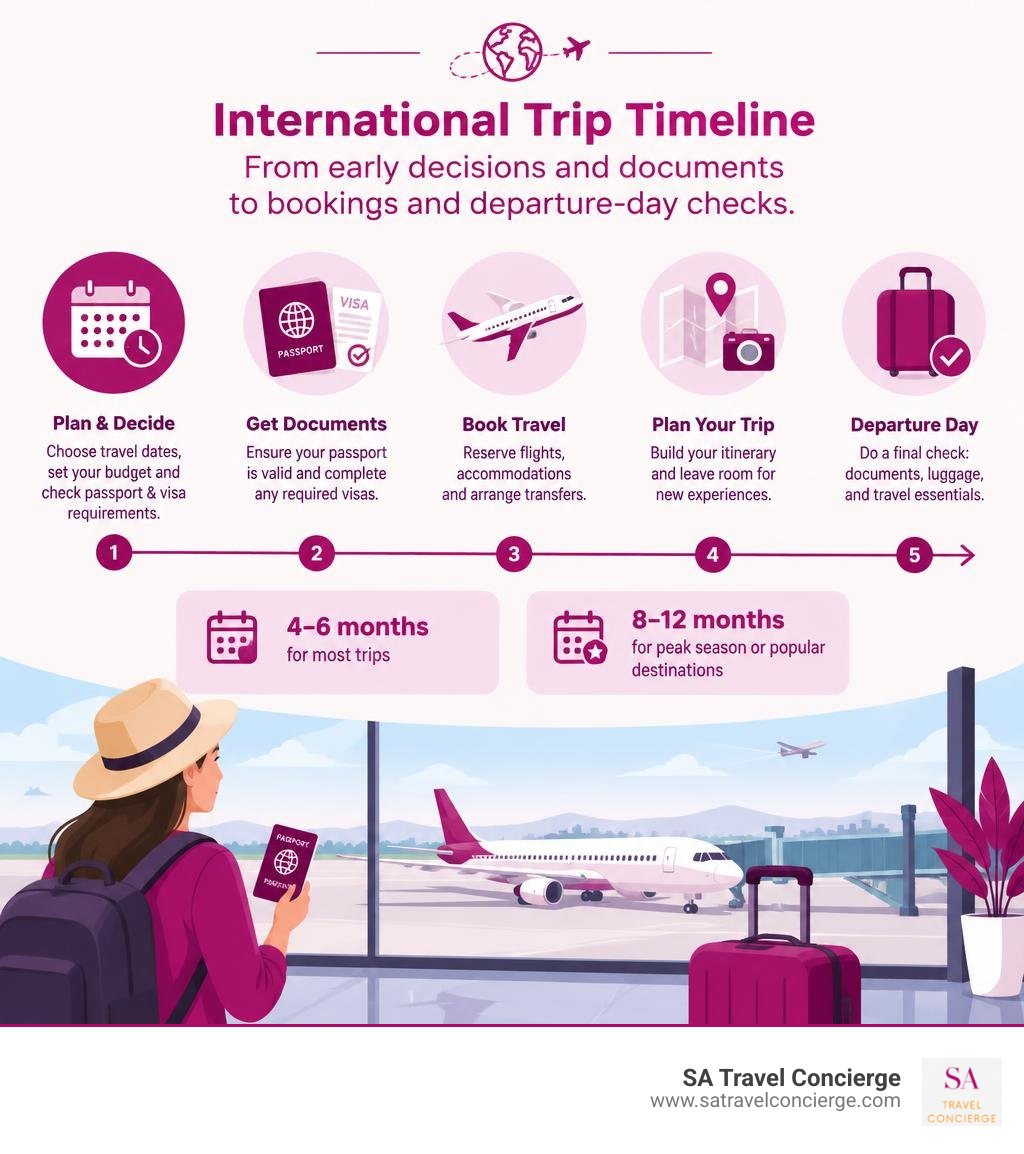
Start four to six months before departure by choosing your travel dates, setting an all-in budget, and checking your passport and visa requirements. For a popular destination in peak season, start eight to twelve months ahead. Then book flights and lodging, arrange transfers, and leave room in your itinerary to enjoy the trip.
Your first overseas adventure does not need to become a second job. Decide what matters most to you, whether that is comfort, privacy, food, or time with family. A travel concierge can take those priorities and handle the research, bookings, and logistics while you focus on the experience. For official guidance on entry requirements, consult the U.S. Department of State's international travel resources.
Essential Foundations of International Vacation Planning
Planning an international vacation involves roughly a dozen distinct moving parts. When travelers attempt to manage everything unassisted, it is remarkably easy to overlook critical details like passport expiration validity rules or foreign transaction fees. Mastering international vacation planning begins with establishing a realistic timeline, choosing the right destination, and creating a transparent budget framework.
For most standard international journeys, starting your preparations 4 to 6 months in advance provides ample time to secure preferred accommodations, book flights within the optimal price window, and handle document processing without unnecessary stress. However, if your journey coincides with peak travel periods—such as summer in the Mediterranean or cherry blossom season in Japan—extending your planning horizon to 8 to 12 months ahead is essential.
To help you establish realistic financial expectations, we have broken down typical 7-day international vacation expenses across major global regions and service tiers.
| Region | Travel Tier | Budget Range (Per Person) | Budget Range (Couple / 2 Adults) | Key Inclusions |
|---|---|---|---|---|
| Europe & Latin America | Budget | $1,400 – $2,200 | $2,800 – $4,400 | Economy flights, boutique hostels/3-star hotels, public transit, self-guided visits |
| Europe & Latin America | Mid-Range | $2,500 – $4,000 | $3,500 – $6,500 | Standard flights, 4-star hotels, regional trains, small group tours, dining out |
| Europe & Latin America | Luxury / Premium | $5,000 – $9,000+ | $8,500 – $15,000+ | Premium cabin airfare, 5-star luxury hotels, private chauffeurs, bespoke private guides |
| Asia | Budget | $1,600 – $2,600 | $3,200 – $5,200 | Economy long-haul, standard guesthouses/3-star stays, local rail/buses |
| Asia | Mid-Range | $3,000 – $5,000 | $5,500 – $9,500 | Economy/Premium Economy, 4-star boutique hotels, bullet train passes, curated excursions |
| Asia | Luxury / Premium | $6,500 – $12,000+ | $12,000 – $22,000+ | Business class airfare, 5-star flagship resorts, VIP airport assistance, private cultural masters |
First Steps in International Vacation Planning: Determining Budget and Destination
The first step in planning any overseas journey is matching your available time off with the appropriate destination and pace. A common misconception among first-time international travelers is confusing trip length with functional time on the ground. A 5-day overseas trip often translates to only 3 or 4 functional sightseeing days once long-haul flights, airport transfers, and time zone adjustments are factored in.
When establishing your total expenditure ceiling, account for every layer of your travel:
- Long-haul and regional airfare
- Accommodations and resort fees
- Intercity rail, rental vehicles, and private transfers
- Daily dining, culinary experiences, and gratuities
- Guided excursions, museum admissions, and event tickets
- Document processing, routine health clinic visits, and insurance
Always allocate a 10% contingency buffer to your overall budget. Flight prices alone can fluctuate by $400 to $800 per person depending on your home airport and booking lead times. If you want a seamless experience tailored to your exact preferences, our custom travel planning services eliminate the guesswork and ensure your itinerary aligns perfectly with your investment.
Passport Validity and Essential Visa Requirements
Long before you finalize your departure flights, inspect your travel documents. The single most common administrative surprise for overseas travelers is the six-month validity rule. Many countries strictly deny entry to foreign nationals whose passports expire within six months of their scheduled departure date from the destination country.

Routine U.S. passport processing typically takes 4 to 6 weeks, while expedited processing requires 2 to 3 weeks. If your passport expires within 9 months of your anticipated return, submit your renewal immediately.
Additional entry and health logistics to consider include:
- Visa and Entry Waivers: Check the official consular requirements for your destination 6 to 8 weeks before departure. For travel within the European Schengen Area, American citizens can currently travel for tourism up to 90 days within any 180-day window without an advance long-stay visa.
- Expedited Screening: Enrolling in trusted traveler programs saves significant time. TSA PreCheck costs $80 for a five-year membership, while Global Entry costs $100 for five years and includes complete TSA PreCheck benefits alongside expedited U.S. customs re-entry.
- Travel Health and Vaccines: If you are visiting tropical or developing destinations, schedule an appointment with a specialized travel health clinic at least 6 weeks before your trip. A consultation typically costs $75 to $200 plus the price of destination-specific immunizations.
Booking Flights and Securing Accommodations Strategically
Securing airfare at the ideal moment prevents unnecessary budget inflation. Airfare algorithms adjust constantly, but booking within data-backed regional sweet spots consistently yields the best balance of value and seat availability.

To maximize your flight budget, monitor fares within these proven booking windows:
- Europe: Book 10 to 12 weeks prior to departure.
- Asia: Book 12 to 16 weeks prior to departure.
- South and Central America: Book 8 to 12 weeks prior to departure.
While Tuesday and Wednesday departures historically offered slightly lower fares, contemporary pricing models emphasize booking lead times and seasonality over the specific day of the week you search. For intercontinental journeys, selecting exceptional premium cabins elevates the entire experience; explore our overview of the top business class airlines to discover which carriers offer industry-leading lie-flat comfort, fine dining, and lounge amenities.
Booking Lodging and Ground Transportation Early
For standard international destinations, lock in hotel accommodations 6 to 8 weeks before departure. However, for high-demand regions during peak months—such as the Greek Islands, the Amalfi Coast, or Iceland in mid-summer—secure your lodging 4 to 6 months ahead.
Always opt for flexible, refundable room rates when initially assembling your trip. This protects your investment if your schedule shifts and allows you to re-evaluate rates 4 to 6 weeks before travel.
Ground transportation logistics require equal foresight:
- High-Speed Rail: Pre-book point-to-point high-speed train tickets in Europe (such as Eurostar, TGV, or Frecciarossa) and Japan (Shinkansen) 4 to 6 weeks in advance to secure seat assignments and avoid walk-up fare surcharges.
- Car Rentals: If your itinerary involves rural driving, reserve vehicles well in advance and verify whether your destination requires an International Driving Permit (IDP).
- Arrival Transfers: After a long intercontinental flight, navigating public transit with luggage can be exhausting. Arranging professional airport transfer planning guarantees a private driver meets you at arrivals for a stress-free transition to your hotel.
Crafting a Balanced Itinerary and Managing Travel Logistics
Over-planning is the fastest way to exhaust yourself on an overseas vacation. Trying to cram four cities into seven days transforms what should be an enriching adventure into a blur of train platforms, packing cubes, and hotel check-outs.

A well-designed 7-day international itinerary should feature 7 to 10 fixed bookings in total, rather than 20 or 30 rigid appointments. Limit yourself to one primary anchor activity per day—such as a morning private museum tour or an afternoon cooking masterclass—and leave 2 to 3 hours of unscheduled time daily for spontaneous exploration, neighborhood strolls, or relaxing at a sidewalk café. For tailored inspiration on structuring a sophisticated European journey, review our luxury Europe travel tips 2026.
Mastering Currency, Banking, and International Vacation Planning Safeguards
Managing your finances smoothly abroad requires minimal effort when addressed before you leave home:
- Eliminate Foreign Transaction Fees: Standard credit cards frequently charge a 2.5% to 3% foreign transaction fee on every international swipe. Over a multi-thousand-dollar vacation, these hidden fees add up significantly. Carry primary and backup credit cards that feature zero foreign transaction fees.
- Notify Financial Institutions: Log into your banking and credit card mobile applications to set international travel notices, ensuring your cards are not flagged for suspicious foreign activity while dining or shopping.
- Secure Arrival Cash: While contactless mobile payments and chip-and-PIN cards dominate Europe and parts of Asia, cash remains vital for small family-run eateries, rural markets, and local tips. Order $100 to $200 in local currency from your primary bank roughly two weeks before your departure date. When taking your loved ones abroad, review our luxury family travel guide 2026 for practical tips on managing group dynamics and logistics smoothly.
Securing Comprehensive Travel Insurance and Contingency Planning
Comprehensive travel insurance is essential for any international itinerary, particularly when non-refundable trip investments exceed $5,000 per person. Domestic health insurance plans—including Medicare and most employer-sponsored policies—rarely provide comprehensive medical coverage outside the United States.
A comprehensive policy generally costs between 4% and 6% of your total trip cost. For a $7,000 itinerary, a $280 to $420 insurance premium is a modest price to safeguard against major disruptions:
- Emergency Medical Care and Evacuation: Covers hospital stays, emergency procedures, and medical repatriation flights back to the United States.
- Trip Cancellation and Interruption: Reimburses prepaid, non-refundable hotel stays, flights, and private excursions if severe illness or emergencies force you to cancel.
- Lost or Delayed Baggage: Reimburses essential clothing and personal item purchases while your carrier locates misplaced luggage.
Building a Digital Disruption Kit: Store digital PDF scans of your passport data page, visa documents, travel insurance policy numbers, and emergency contact numbers in secure cloud storage accessible from your mobile phone. Keep offline copies saved directly to your device. If your passport is misplaced or stolen, contact the nearest U.S. embassy or consulate immediately; emergency replacement passports are typically issued within 1 to 3 business days.
Pre-Departure Preparation and Departure Day Execution
Careful preparation during the final 48 hours ensures your travel day runs smoothly.
- Pack a Versatile Capsule Wardrobe: Select neutral, breathable fabrics that layer easily and mix-and-match effortlessly across different climates. Resist the urge to overpack; navigating cobblestone alleys or regional train stations with oversized luggage creates unnecessary friction.
- Universal Power Adapters: Different regions utilize distinct plug configurations (such as Type C/E/F in Europe and Type G in the UK). Pack two universal power adapters with built-in USB-C fast-charging ports.
- Carry-On Essentials: Always keep prescription medications (in their original labeled pharmacy containers), essential electronics, valuable jewelry, and one change of clothes in your carry-on luggage. Never pack life-critical items in checked bags.
- 24-Hour Digital Check-In: Check in for your international flight exactly 24 hours prior to departure via your airline's mobile app. Confirm your seat assignments and download digital boarding passes to your smartphone wallet.
- The 3-Hour Airport Rule: Arrive at the airport a full 3 hours before your scheduled international departure. High-volume departure hubs like New York (JFK), Los Angeles (LAX), and Miami (MIA) experience heavy international check-in queues, security screening delays, and extensive terminal walks.
Frequently Asked Questions About Planning an International Trip
How far in advance should I start planning an overseas vacation?
For standard international journeys, begin planning 4 to 6 months before your intended departure date. This provides sufficient time to process passport renewals, secure competitive flight pricing within regional sweet spots, and book high-quality accommodations. For high-demand travel windows—such as summer in Southern Europe or holiday peak weeks—begin your preparations 8 to 12 months ahead.
Do I really need travel insurance for an international trip?
Yes. Comprehensive travel insurance is strongly recommended for any international vacation, especially when total non-refundable reservations exceed $5,000 per traveler. Most domestic health insurance policies do not cover medical treatments, hospitalizations, or emergency medical evacuations overseas. Travel insurance policies also protect your financial investment against airline cancellations, trip interruptions, and lost baggage.
What is the most common mistake first-time overseas travelers make?
The most frequent mistake is over-scheduling daily activities and underestimating the physical toll of long-haul travel. First-time travelers often try to visit too many cities in a single week, leaving them exhausted. Other common oversights include neglecting to verify the six-month passport validity rule, forgetting to notify banks before using credit cards abroad, and failing to budget for ground transfers.
Conclusion: Embark on Your Overseas Journey with Confidence
Planning an international vacation should be an exciting milestone, not an overwhelming administrative burden. By establishing your budget early, understanding document requirements, booking key reservations within optimal windows, and maintaining a balanced daily pace, you can explore the world with absolute peace of mind.
At SA Travel Concierge, we specialize in transforming ambitious travel ideas into seamlessly orchestrated, stress-free journeys. Whether you reside in New York, Los Angeles, San Francisco, Miami, Dallas, Chicago, or Greenwich, our dedicated team handles every detail—from private aviation and luxury accommodations to bespoke cultural tours and 24/7 travel support.
Let us curate your next unforgettable journey. Discover the ultimate in personalized holiday design through our dedicated leisure travel services today.