
How to Coordinate Flights and Lodging for Large Travel Groups
Essential Frameworks for Group Travel Planning

Planning a trip for ten, twenty, or fifty people involves unique dynamics. Left unmanaged, group travel planning quickly degrades into dozens of unread messages, conflicting schedules, and accidental financial awkwardness. To protect both relationships and budgets, every shared journey requires a clear operational framework.
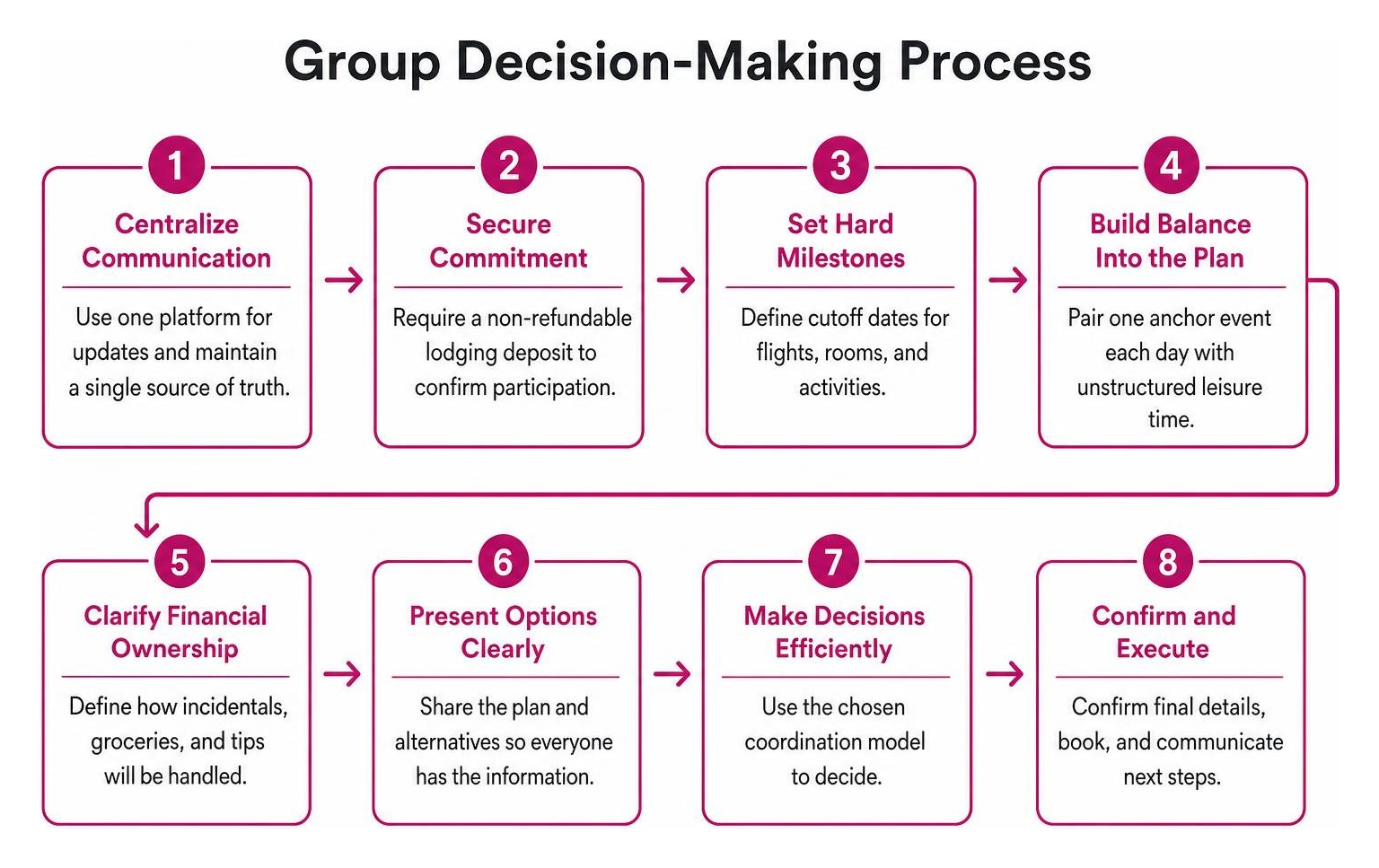
Here are the golden rules for stress-free coordination:
- Enforce a Single Communication Channel: Never split group communication across SMS, email, and social messaging apps. Designate one platform for real-time updates and maintain a single source of truth for the master itinerary.
- Require a Commitment Deposit: Interest is free; reservations are not. Treat an RSVP as tentative until the individual backs it up with a non-refundable lodging deposit.
- Design Around Hard Milestones: Set definitive cutoff dates for flights, room selections, and activity bookings. Anyone who misses a deadline books their own arrangements outside the group block.
- Plan for Individual Downtime: Scheduling every hour of every day guarantees exhaustion and friction. A balanced daily schedule pairs one anchor event with unstructured leisure time.
- Clarify Financial Ownership Upfront: Define how incidentals, grocery runs, and tips will be handled before anyone steps foot in an airport.
Whether coordinating high-end family reunions or custom leisure travel for friends, establishing firm ground rules early eliminates friction before it starts.
Coordination Models: Opt-In Itineraries vs. Full Consensus
One of the quickest ways to stall group planning is seeking 100% consensus on every decision. When ten people must agree on every dinner reservation, museum ticket, and flight connection, the planning process grinds to a halt.
To manage group dynamics smoothly, evaluate which coordination model best fits your party:
- The Single-Leader "Opt-In" Model: One designated point person sets the dates, reserves the foundational lodging, and outlines the anchor events. Group members are invited to join the trip and choose which optional daytime outings they wish to attend. This model works best for large gatherings, friends' getaways, and milestone celebrations where activity preferences vary widely.
- The Decentralized Committee Model: Planning tasks are split among members (e.g., one coordinates flights, another handles villas, a third curates restaurants). This approach suits smaller, highly cohesive groups where everyone contributes equally and communicates regularly.
- The Professional Concierge Model: Logistics, contracts, and vendor coordination are outsourced to dedicated specialists. This is ideal when booking international destinations, complex multi-leg transits, or private property buyouts where financial liability and contracted attrition clauses require professional management.
For most casual and luxury social groups, the opt-in framework offers the highest satisfaction. It relieves the organizer of having to please everyone while giving independent travelers room to tailor their days.
Strategies to Prevent Organizer Burnout and Asymmetrical Workload
In traditional group planning, one person often absorbs roughly 80% of the operational workload. That primary planner spends hours chasing payments, researching transit routes, reconciling meal tabs, and fielding repetitive questions. By the time the vacation begins, the organizer needs a vacation just to recover from the planning.
To prevent burnout:
- Shift to Asynchronous Collaboration: Avoid circular group-chat debates by presenting curated options via collaborative platforms rather than asking open-ended questions like "Where should we eat?"
- Automate Information Delivery: Keep flight itineraries, accommodation addresses, check-in instructions, and packing checklists in a shared hub accessible on mobile devices.
- Separate Corporate and Social Roles: For company retreats, leadership summits, or executive business travel, leave logistical execution to designated operations staff or corporate concierges rather than tasking team members with group reservations.
- Set Decision Deadlines: When polling the group for preferences, give a firm 48-hour response window. If someone does not vote, their vote defaults to the majority choice.
Coordinating Multi-City Flights and Arrival Logistics
Getting a large group to the same destination on schedule is rarely as simple as booking one flight number. Travelers often depart from different home cities, hold varied airline status, or want to apply personal frequent flyer points. Managing these variables requires a strategic approach to arrival windows and ground transportation.
Establishing Common Arrival Windows Across Time Zones
Rather than demanding that everyone book the exact same departure, establish a Shared Arrival Window at the destination airport (for example, between 1:00 PM and 3:30 PM).
Setting a defined landing bracket streamlines logistics:
- Consolidated Airport Shuttles: Instead of booking ten separate private transfers or rideshares, you can stage one or two spacious executive sprinter vans to transport the entire group together.
- Buffer for Flight Delays: A structured arrival window gives travelers departing across multiple time zones a natural buffer for minor mechanical or weather delays without disrupting dinner plans.
- Streamlined Check-Ins: Concentrated arrivals mean the entire party checks into the property around the official check-in time, preventing early-bag drop confusion.
When coordinating regional urban arrivals, such as handling logistics under official NYC group travel guidelines, factoring in bridge, tunnel, and peak traffic congestion between major hubs like JFK, LaGuardia, and Manhattan is essential for setting realistic dinner reservation times.
Group Airfare Contracts vs. Individual Bookings
When traveling with 10 or more passengers on the same flight route, airlines offer formal Group Airfare Contracts. Understanding when to utilize a group block versus individual bookings will protect your group's budget and flexibility.
| Feature | Group Airfare Contract (10+ Passengers) | Individual Online Bookings |
|---|---|---|
| Fare Parity | Locks in a single guaranteed rate for all travelers. | Fares fluctuate and increase as seats in lower fare buckets sell out. |
| Deposit Terms | Requires a deposit per seat upfront; balance due 30–60 days before departure. | 100% of the ticket cost is due immediately at purchase. |
| Name Flexibility | Passenger names can often be added or swapped up until final ticketing without penalty fees. | Non-refundable; name changes are prohibited or incur heavy airline fees. |
| Loyalty Points & Upgrades | Mixed mileage accrual; manual frequent flyer entry often required. | Travelers can easily apply miles, status perks, and seat upgrades directly. |
| Best For | Large corporate groups, destination weddings, school groups on identical routes. | Friends and families departing from multiple cities or prioritizing point redemptions. |
For groups departing from different metropolitan airports, allowing travelers to book flights independently within an agreed arrival window is usually the most practical route. For single-origin parties exceeding ten people, contracting a dedicated group block prevents fare spikes across the party.
Sourcing and Managing Accommodations for Large Groups

Selecting accommodations for a large group involves balancing communal gathering spaces with personal privacy. A single poorly configured floor plan can lead to friction over shared bathrooms, noise bleed, and uneven room sizes.
Private Villa Rentals vs. Hotel Room Blocks
Choosing between a private villa estate and a boutique hotel room block depends on group size, liability preferences, and how much daily service your party expects.
| Consideration | Private Villa / Luxury Estate Buyout | Hotel Room Block (Negotiated Rates) |
|---|---|---|
| Communal Atmosphere | Unmatched shared spaces: private pools, living rooms, and private kitchens for late-night socializing. | Socializing occurs in public lounges, restaurants, or separate hospitality suites. |
| Contract Liability | Single primary renter signs the master lease and assumes financial liability for damages and cancellation. | Individual guests provide personal credit cards for their rooms and incidentals via a custom booking link. |
| Privacy & Sound Isolation | Varied bedroom acoustics; common living room noise can disturb light sleepers in nearby bedrooms. | High privacy; individual keycard rooms, soundproofing, and private en-suite bathrooms for every guest. |
| Daily Staff & Service | Varies widely; may require hiring private chefs, daily housekeeping, and pre-arrival provisioning. | Full standard amenities: 24/7 concierge, daily maid service, room service, on-site dining, and valet parking. |
| Attrition & Minimums | Fixed total cost regardless of whether one or two guests cancel at the last minute. | Group rates often allow flexibility with an attrition clause (e.g., dropping 10–15% of rooms without penalty). |
For multi-generational family milestones, luxury estates offer a warm, private atmosphere. For corporate offsites or large friend networks with varying sleep schedules, hotel room blocks minimize contract liability and ensure equitable comfort.
Room Allocation Strategies and Common Area Dynamics
If your group selects a luxury villa or multi-room estate, assign rooms before arrival. Leaving room selection to a first-come, first-served scramble when guests arrive tired with luggage is a recipe for awkwardness.
Follow these best practices to ensure fair room distribution:
- Tier Pricing by Room Quality: If a property features a palatial primary suite with an ocean-view balcony alongside smaller guest rooms with shared hallway baths, do not divide the total rental bill evenly. Charge a fair premium for the primary suites to offset costs for those in standard rooms.
- Group by Sleep Schedules: Place early risers and families with young children in wings away from night owls who plan to use communal entertainment spaces late into the evening.
- Account for Bathroom Ratios: Ensure your chosen property maintains an appropriate guest-to-bathroom ratio. A luxury villa hosting twelve adults should ideally offer en-suite or dedicated baths for every bedroom to avoid morning bottlenecks.
- Coordinate Local Transport: For spread-out destinations like coastal California, following practical San Diego group trip planning guidelines will help you arrange multiple rental vehicles or pre-scheduled car services. This gives independent subgroups flexibility to head to the beach, golf course, or local cultural sites without stranding others at the villa.
Managing Group Dynamics, Schedules, and Money

The most memorable group trips strike a balance between shared moments and personal freedom. Managing schedules, technology, and finances transparently keeps the focus on enjoying the destination.
Digital Tools for Group Travel Planning and Schedules
Modern mobile travel platforms eliminate the need to cross-reference multiple email threads and paper receipts.
- Availability & Polling: Tools like WhenAvailable allow groups to vote on potential travel windows without requiring everyone to create individual software accounts, identifying mutual availability quickly.
- Itinerary Management: Platforms such as TripIt or Wanderlog centralize airline confirmation codes, hotel vouchers, and addresses in one offline-accessible master itinerary.
- Route & Activity Mapping: For regional road trips, mapping stops using dedicated scenic route platforms helps visualize driving legs and identify dining waypoints in advance.
When organizing high-end coastal activities—such as booking private yacht charters or group dining outlined in curated coastal group itineraries—having a centralized digital schedule ensures everyone arrives at the marina on time.
Budgeting and Expense Splitting in Group Travel Planning
Financial ambiguity ruins friendships faster than missed flights. The secret to smooth expense management is clear categorization: distinguish between shared fixed costs (villa rental, airport transfers), shared variable costs (communal groceries, family-style dinners), and individual incidentals (spa treatments, personal shopping, craft cocktails).
To manage costs without friction:
- Pre-Fund a Group Pool: For communal groceries, bar stocking, and villa provisioning, collect a set contribution from each traveler ahead of time. Use a dedicated digital card to draw down funds during the trip.
- Log Costs in Real Time: Use dedicated expense-splitting tools like Splitwise. Assign one person to enter shared bills immediately to avoid stressful receipt audits at the end of the trip.
- Ask for Split Checks Early: When dining out with large parties, inform the restaurant server before ordering whether the bill will be charged to a single group card or split evenly among subgroups.
Balancing Shared Group Meals with Independent Downtime
A successful itinerary is structured around anchor points rather than back-to-back commitments.
- The One-Anchor-Event Rule: Schedule a maximum of one major planned activity per day—such as a morning historical walking tour or an afternoon private boat excursion. Leave the remainder of the daylight hours open for spontaneous exploration, pool lounging, or rest.
- Preserve Group Dinners: Make evening meals the daily gathering point. Having everyone reconvene for dinner allows group members to share stories from their separate afternoon adventures.
- Support Subgroups: Encourage smaller groups to split off based on energy and interests. Some travelers may want a 7:00 AM mountain hike, while others prefer sleeping in and finding a quiet neighborhood café.
For additional perspectives on curating thoughtful itineraries that balance shared moments with downtime, explore our travel blog.
Frequently Asked Questions About Large Group Trips
How far in advance should a group book flights and accommodations?
For large parties requiring five or more hotel rooms or a premier private villa, begin planning 6 to 9 months in advance. For peak holiday weeks, luxury resort buyouts, or major international festival seasons, initiate bookings 10 to 12 months ahead. Group airline inventory and top-tier multi-bedroom estates book up well ahead of standard accommodations.
How do you handle group members with drastically different travel budgets?
Establish baseline non-negotiable costs early (the shared lodging and primary transfer) so everyone knows the core financial commitment before RSVPing. Keep daytime activities, specialty dining, and excursions entirely opt-in. This enables budget-conscious travelers to enjoy casual lunches or free museum days while luxury-focused guests can book high-end tastings or spa services without awkwardness.
What is the best way to collect non-refundable deposits from group members?
Set firm payment deadlines linked directly to property reservation policies. Make it clear that reservations are made only for guests who have submitted their deposit by the specified date. Using automated digital payment requests with transparent breakdowns creates clear peer accountability and prevents the organizer from having to float thousands of dollars on personal cards.
Conclusion
Coordinating group travel does not have to feel like a second full-time job. By establishing clear arrival windows, choosing the right accommodation model, maintaining transparent financial tracking, and giving travelers the freedom to opt in or out of daily activities, you create an effortless trip for everyone involved—including the organizer.
When you are ready to plan your next milestone celebration, executive gathering, or multi-family escape without the administrative stress, our team is here to manage the details. Explore our full suite of dedicated travel planning services to discover how we craft seamless, high-touch itineraries tailored specifically to your group.