
Core Foundations of Business Trip Logistics Planning

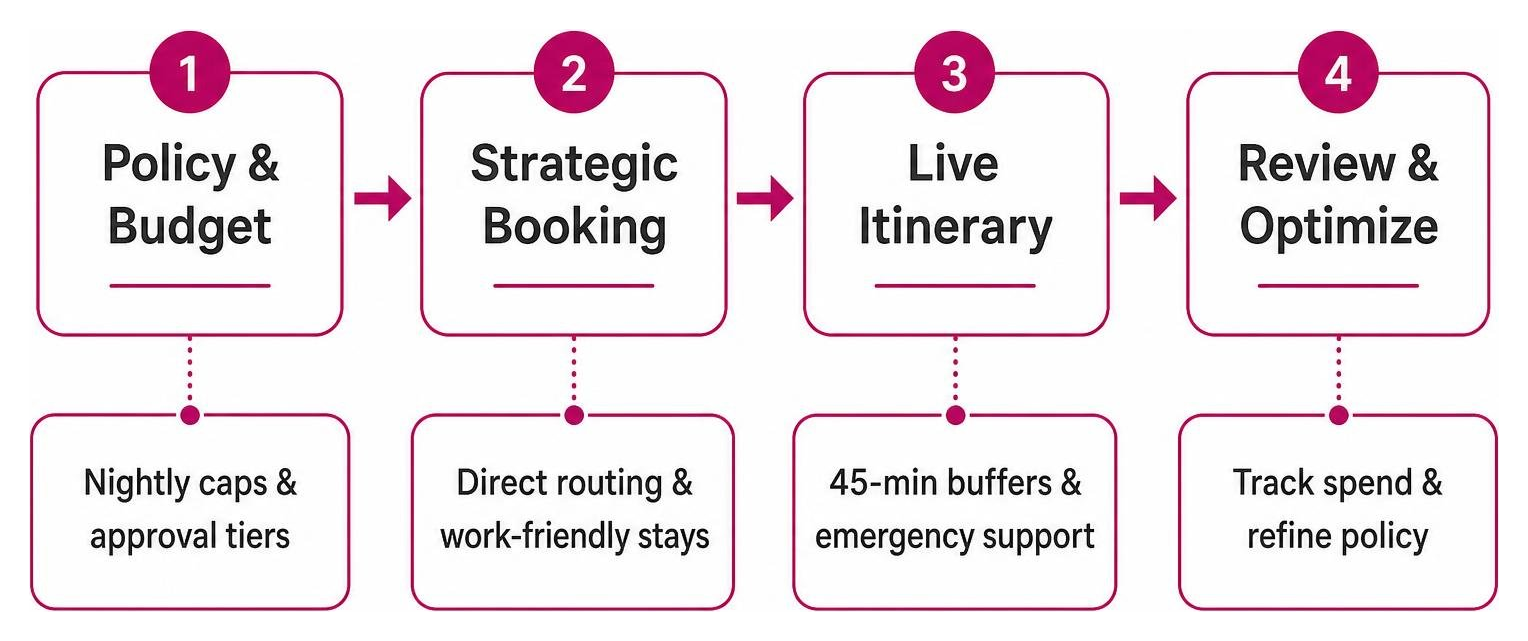
Effective business trip logistics planning starts with a clear framework: set policy-driven budget thresholds, enforce advance booking windows, build buffer-managed itineraries, and centralize trip details in one management system. Coordinating corporate travel across multiple cities is rarely as simple as booking a flight and reserving a room. Corporate travel accounts for roughly 10% of overall business expenses, meaning unorganized bookings directly impact company margins. Establishing strong structural foundations—centered on clear policies, structured approval thresholds, and strict booking windows—transforms corporate travel logistics from reactive fire-fighting into a smooth, predictable routine.
Aligning Corporate Travel Policy with Budget Thresholds
A company travel policy should remove ambiguity for both travelers and executive coordinators. Without clear guidelines, travel spend creeps upward, and administrative teams spend countless hours reviewing non-standard bookings.
Effective policies clearly outline:
- Nightly Rate Caps: Define maximum allowable hotel rates by city tier (for example, standard per diem limits in major hubs like New York City, San Francisco, or Boston compared to smaller secondary markets).
- Per Diem Spending Limits: Structure daily meal and incidental allowances using standard benchmarks such as GSA per diem rates ($50–$75/day domestically, $75–$100/day internationally).
- Approval Routing: Match approval requirements to cost tiers. For instance, trips under $1,500 may require only a direct manager's sign-off, while itineraries between $1,500 and $5,000 need finance approval, and multi-leg international journeys require executive review.
- Incentive Structures: Implementing rewards programs that offer loyalty perks or travel credits encourages team members to choose cost-conscious travel options.
Essential Steps in Business Trip Logistics Planning for Itineraries
Building an itinerary for a multi-city schedule requires precision. When an executive needs to fly from Boston to San Francisco, head north to Seattle, and return home for Thursday meetings, small delays can cause cascading schedule problems.
Using unified digital management systems rather than scattered spreadsheets keeps every confirmation code, meeting location, and transfer detail organized in real time. For those seeking expert guidance, exploring a dedicated business travel itinerary guide provides practical frameworks for building complex multi-leg schedules.
| Logistics Component | Traditional Spreadsheet Approach | Centralized Corporate Travel Management |
|---|---|---|
| Data Centralization | Scattered across confirmation emails and loose notes | Single digital itinerary accessible offline and on mobile |
| Booking Windows | Ad-hoc requests leading to high last-minute fares | Enforced 14–21 day advance booking rules |
| Schedule Buffers | Tight, back-to-back transit windows prone to delays | Strategic 45–90 minute windows built around high-priority meetings |
| Disruption Response | Traveler manually calls airline helplines | Dedicated agent or automated rebooking system instantly reroutes flights |
| Expense Tracking | Paper receipts submitted weeks after travel | Real-time digital receipt scanning and automatic ERP sync |
Strategic multi-city routing requires embedding minimum 45-minute buffer windows between local transit legs and up to 90 minutes for cross-town transit during peak traffic hours. This ensures that a delayed morning flight does not derail an afternoon client presentation.
Strategic Booking: Transportation and Accommodation Logistics
Transportation and lodging decisions should support the business objectives of the trip. The cheapest flight or hotel often ends up costing more in lost productivity, fatigue, and missed connections.
Selecting Flights and Ground Transportation for Maximum Productivity
When arranging transport for high-stakes meetings, prioritize efficiency and working comfort over small price differences:
- Direct Flight Routing: Book non-stop flights whenever available to eliminate connection risks. Choosing prime morning departures minimizes the chance of delays caused by aircraft rotations throughout the day.
- In-Transit Connectivity: Confirm that aircraft and rail options provide high-speed Wi-Fi and power outlets so travelers can review presentations and manage emails in transit.
- Dedicated Ground Transfers: Avoid relying on crowded airport taxi lines. Pre-arrange executive car services, executive sprinter vans, or vetted ride-hailing profiles for smooth airport-to-hotel transfers.
When visiting dense metropolitan hubs, local market dynamics play a major role in route efficiency:
- In the Northeast, reviewing smart tips for planning a business trip to New York City helps navigate regional airport transfers and rapid transit options.
- On the West Coast, consulting a business travel guide to San Francisco makes coordinating transit between downtown financial centers and Silicon Valley corporate campuses seamless.
- Travelers heading south can use a business traveler's guide to Miami to master logistics between Brickell, Downtown, and Miami Beach venues.
Organizations managing frequent cross-country or global itineraries benefit from curated corporate travel services, which streamline flight bookings, negotiate corporate volume discounts, and secure flexible cancellation terms.
Booking Work-Friendly Accommodations and Leveraging Corporate Perks
Where your travelers stay directly impacts how well they perform. A property located ten miles from the client's office might save $40 a night, but traffic delays and transit friction quickly erase those savings.
When selecting business accommodations:
- Location Proximity: Choose properties within walking distance or a short commute of meeting venues to cut down on transit time.
- In-Room Work Environments: Ensure rooms feature ergonomic desks, bright lighting, quiet surroundings, and high-speed internet.
- Executive Amenities: Prioritize hotels that offer early check-in, on-site business centers, reliable laundry turnaround, and nutritious breakfast options.
- Loyalty Program Benefits: Consolidate reservations with major hotel brands to secure late checkouts, complimentary lounge access, and room upgrades.
Even on busy business trips, carving out brief downtime improves focus. Travelers can review 4 ways to maximize business travel to blend focused work sessions with restful breaks. Those extending their stay for personal time can reference how to plan a weekend escape to recharge effectively before returning home.
Pre-Trip Preparation, Compliance, and Travel Technology
A successful business trip is largely decided before leaving for the airport. Integrating modern travel tools with proactive compliance checks keeps travelers safe and prepared for every leg of the journey.
Tech Tools and Travel Management Software Integration
Modern travel technology replaces disorganized email chains with organized digital workspaces:
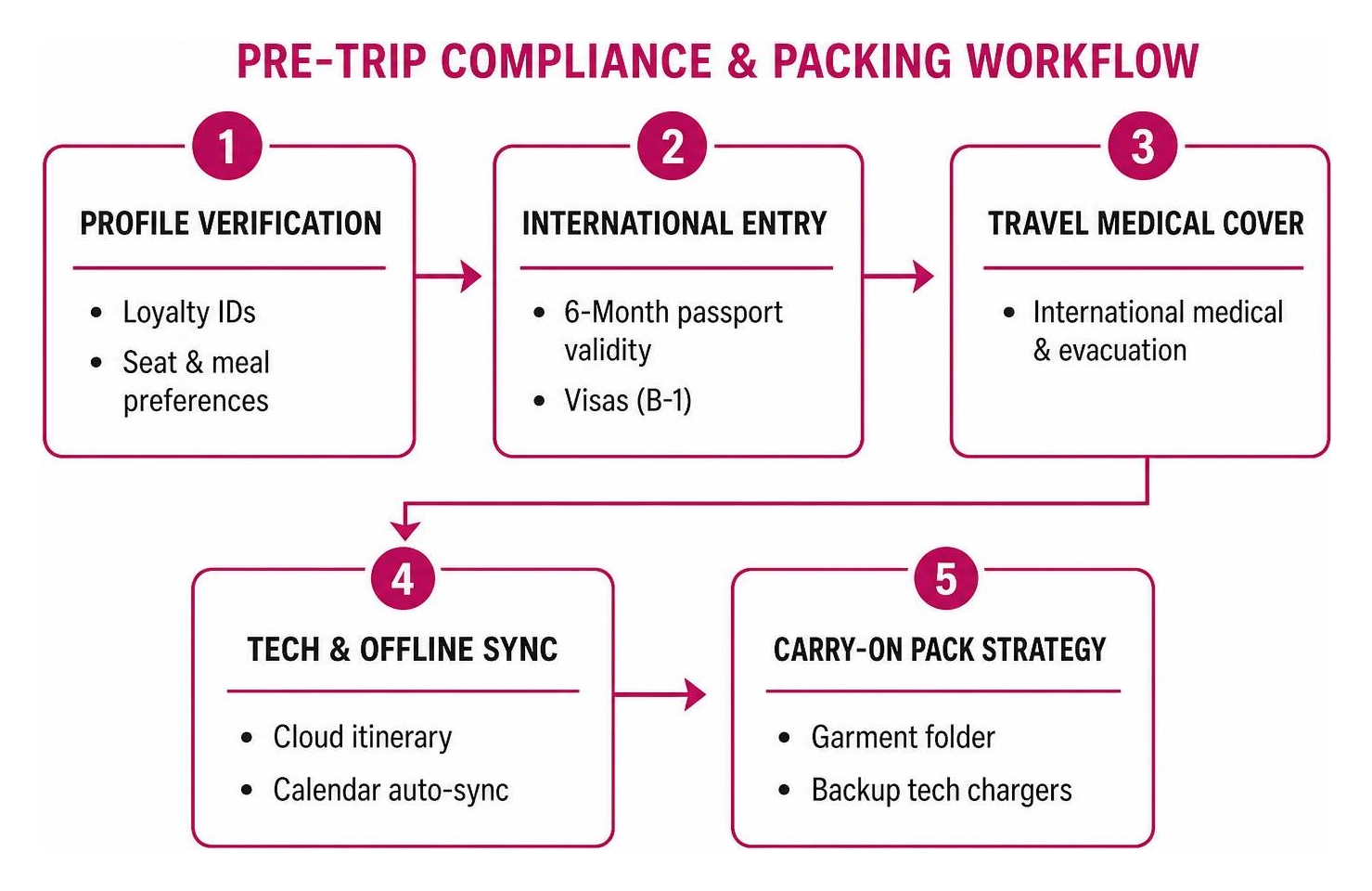
- Centralized Traveler Profiles: Store frequent-flyer numbers, TSA PreCheck/Global Entry IDs, seat preferences, and emergency contacts in one central profile so you never have to re-enter details for every booking.
- Automated Calendar Synchronization: Keep travel itineraries automatically synced with executive calendars to prevent scheduling conflicts with remote team members.
- Real-Time Push Notifications: Use mobile flight-tracking tools that immediately notify travelers of gate changes, baggage carousel assignments, and departure delays.
Managing Documentation, Duty of Care, and Packing Essentials
Corporate duty-of-care obligations require companies to know traveler locations and maintain 24/7 safety support. For team members looking to refine their travel routines, our travel blog provides practical insights on business trip preparation, travel wellness, and productivity.
Before departure, verify these essential items:
- Passport and Visa Requirements: Ensure passports have at least six months of validity remaining beyond scheduled return dates. International visitors traveling to the USA may require a B-1 business visitor visa or approved ESTA clearance well in advance.
- Comprehensive Travel Medical Insurance: Domestic health plans often provide limited coverage overseas. International policies can cost as little as $20 to $50 for comprehensive short-term coverage with high maximum limits and emergency evacuation.
- Efficient Carry-On Packing: Packing in a carry-on with a dedicated garment folder eliminates the risk of lost luggage and saves valuable time at the airport. Pack versatile business attire, universal power adapters, portable power banks, and backup physical copies of critical documents.
Executing Multi-City Trips and Streamlining Post-Trip Workflows
Once a trip is underway, logistics management shifts to real-time execution, handling disruptions, and capturing expense data.

Managing On-the-Ground Disruptions
Even well-organized itineraries face weather delays, mechanical cancellations, or last-minute client rescheduling. A clear contingency plan keeps unexpected changes from disrupting the entire trip:
- Immediate Response Protocols: Maintain direct access to dedicated travel support specialists who can rebook flights while other passengers wait in line at airline customer service desks.
- Alternative Transportation Routes: If regional flights are grounded, map nearby rail or executive car alternatives to keep the itinerary on track.
- Flexible Cancellation Terms: Book flexible airfares and hotel rates with favorable cancellation windows to minimize penalties when schedules change.
Post-Trip Expense Reconciliation and Logistics Debriefing
The business trip ends only after financial reconciliation and performance reviews are complete:
- Real-Time Digital Expense Capture: Encourage travelers to scan receipts using mobile expense apps immediately after purchases. This avoids missing receipts and eliminates tedious end-of-month paperwork.
- CRM Contact and Meeting Logging: Log meeting notes, action items, and new contact details into company CRM systems within 24 hours of returning.
- Post-Trip Logistics Debrief: Review what went smoothly and identify any travel bottlenecks. Collecting feedback on hotel quality, driver reliability, and airline performance helps refine future travel plans.
Frequently Asked Questions About Corporate Travel Logistics
What is the optimal booking window for domestic and international business trips?
For domestic corporate travel, book flights and accommodations 14 to 21 days in advance. For international trips, book 21 to 30 days ahead. Booking inside seven days often leads to fare premiums of 40% to 60%.
How can companies manage duty of care during executive travel?
Fulfilling duty-of-care responsibilities requires maintaining a master digital itinerary with real-time traveler locations, running pre-trip safety assessments for unfamiliar destinations, providing comprehensive travel medical coverage, and establishing clear 24/7 emergency contact channels.
What are the most effective ways to handle last-minute travel disruptions?
Incorporate 45- to 90-minute buffers between tight travel legs, keep electronic copies of tickets and itineraries accessible offline, and work with dedicated corporate travel concierges who can instantly rebook canceled flights and adjust hotel check-ins.
Conclusion
Managing multi-city business travel does not have to be stressful. By setting clear travel policies, using smart booking platforms, and focusing on traveler productivity, companies can keep trips run smoothly and on budget.
At SA Travel Concierge, we specialize in high-touch, bespoke corporate travel curation. We handle all the research, booking logistics, and on-the-road support so your team can focus entirely on business goals. Explore our tailored business travel solutions to see how we can elevate your corporate travel experience.